

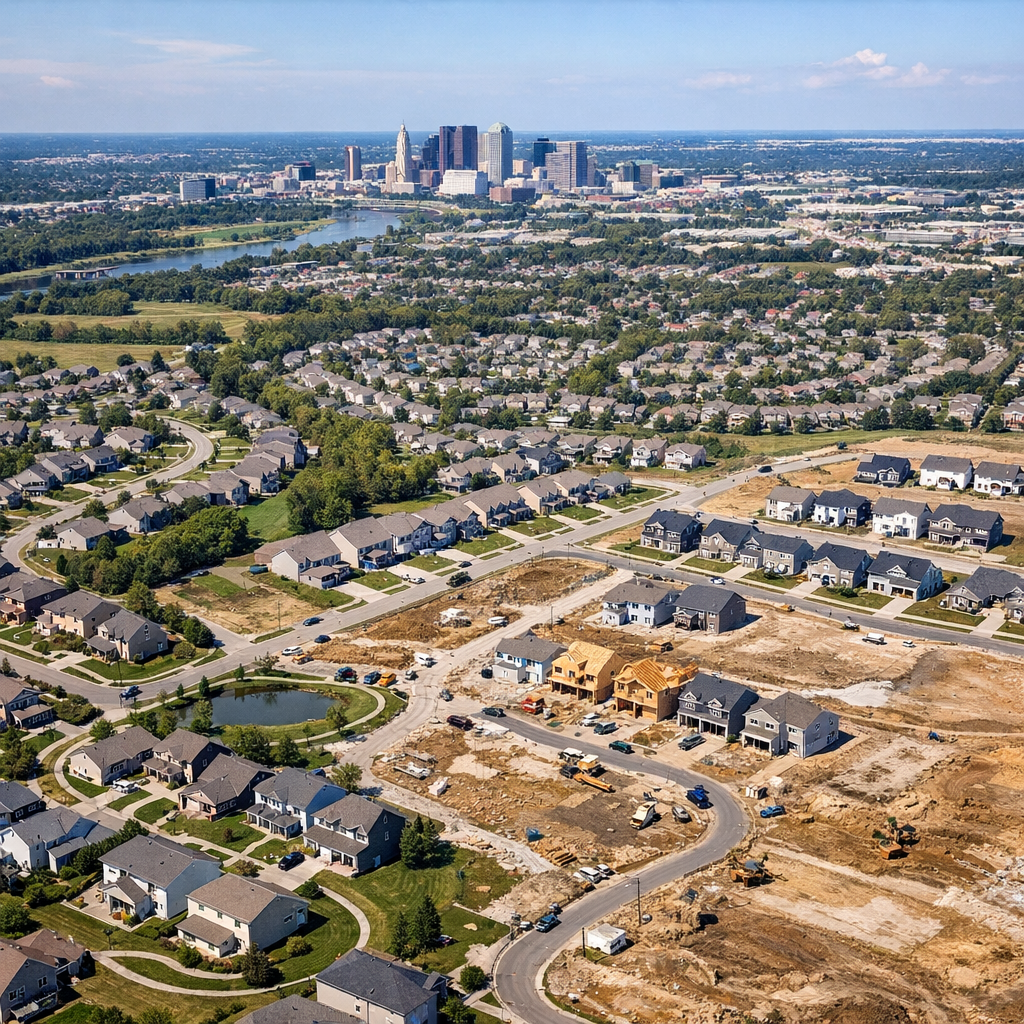
Columbus, Ohio, is experiencing notable shifts in its real estate market, characterized by rising home prices, increased inventory, and evolving rental trends. Understanding these changes is essential for prospective buyers, renters, and investors.
Current Market Trends
Recent data indicates a steady increase in home prices across Central Ohio. Despite a 14% year-over-year decline in closed sales, new listings have risen by 7.8%, and total inventory has grown by 13.4%. Notably, homes are remaining on the market longer, with days on market increasing by 21.9%. This suggests a more balanced market, yet prices continue to climb, reflecting sustained demand.
Rental Market Dynamics
The rental sector in Columbus is also evolving. As of April 2026, the average rent stands at $1,456, marking a 1.6% increase from the previous year. This uptick aligns with national trends, indicating a steady demand for rental properties.
Suburban Shift
There’s a noticeable migration from urban centers to suburban areas within Central Ohio. This shift is attributed to the region’s growing population and limited housing stock in Franklin County. As a result, suburban communities are witnessing increased demand, influencing local real estate dynamics.
Local Development Initiatives
Columbus is actively investing in community development projects. A significant example is the $40 million redevelopment of Kilbourne Run Sports Park in Northland, aiming to establish it as a premier soccer hub by 2026. This project includes multiple artificial and natural turf fields, new playgrounds, and improved infrastructure, enhancing the city’s recreational offerings.
Additionally, the city has implemented the Homeownership Development Program (HDP) to redevelop residential properties for sale or short-term lease. This initiative targets non-profit and for-profit developers to create affordable housing options, contributing to neighborhood revitalization.
Conclusion
Columbus’s real estate landscape is undergoing significant transformations. Rising home prices, shifting buyer preferences towards suburban areas, and proactive development projects are shaping the market. Staying informed about these trends is crucial for making well-informed real estate decisions in the region.