

By Emma Williams
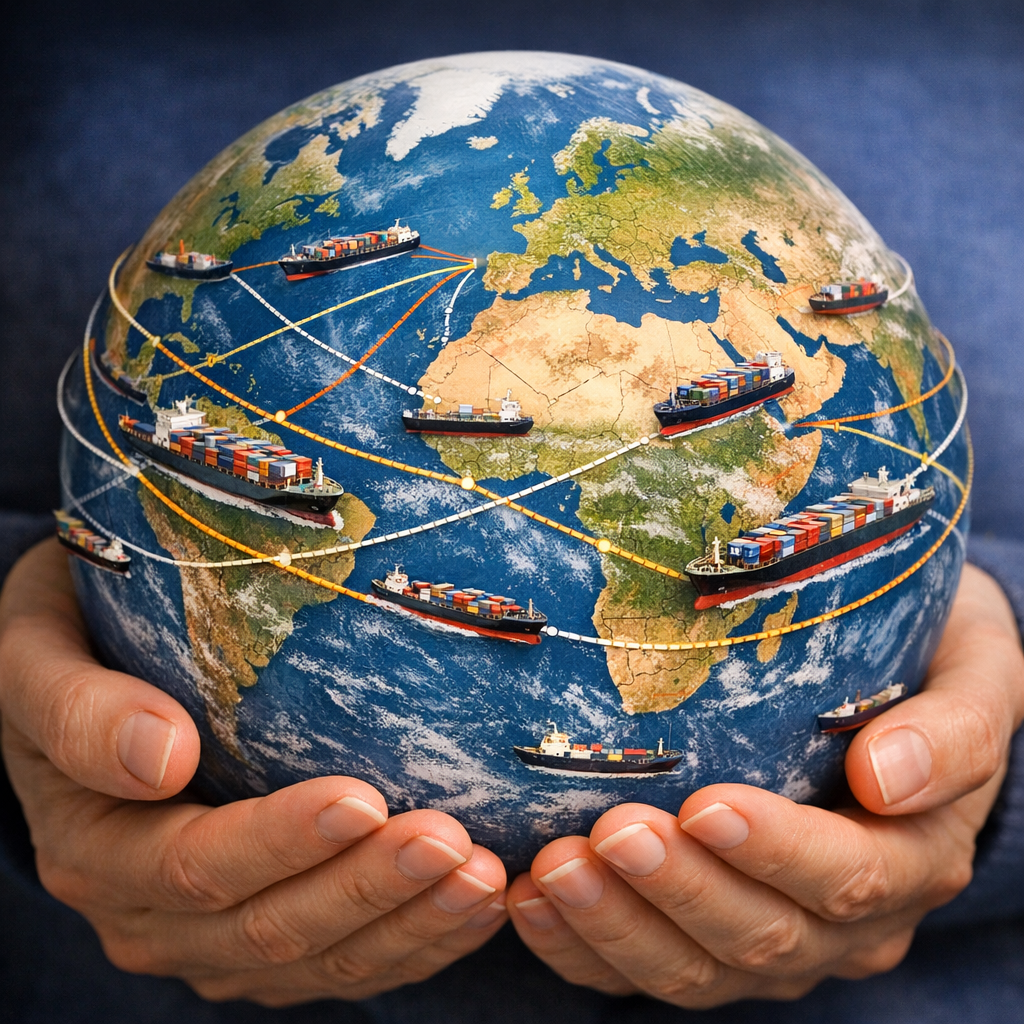
International trade is undergoing fundamental changes—no longer driven merely by geography or cost, but increasingly by politics, technology, and climate imperatives. From shifting value chains to rising protectionism, the global trade system is being reconfigured in ways that will ripple into towns and cities like Columbus.
Geopolitical Realignments & Trade Fragmentation
Countries are reassessing who they trade with and why. Supply chains that were once based purely on minimizing distance or cost are now filtered through lenses of security and political alignment. Several advanced economies are selectively deepening trade with closer, aligned partners, even if doing so comes with higher costs. At the same time, preferential agreements and selective tariffs are on the rise—creating blocs that resemble networks of trust as much as commerce.
AI, Digitalization and High-Tech Exports
Artificial intelligence and other digital technologies aren’t just buzzwords—they’re a force reshaping trade flows. Demand for semiconductors, data-center hardware, and technology services has surged. Major hubs in East Asia and Southeast Asia are supplying much of the world’s appetite for AI infrastructure. And as services delivered digitally gain importance, trade isn’t just about shipping goods—it’s about data, intellectual property, and connectivity.
Supply Chain Resilience and Value Chain Trends
After the disruptions of recent years—pandemic lockdowns, energy price shocks, political turbulence—companies are retooling their operations. Much of global value chain activity remains highly international, but sourcing is diversifying. Multinational firms are investing more locally in foreign markets or in nearby regions, while firms are also seeking alternatives to single points of failure. As products and services become more complex, services delivered via foreign affiliates are growing more central to trade than simple cross-border exchanges.
Climate Commitments & Trade Rules at a Turning Point
On the environmental front, increasing numbers of countries are submitting updated climate commitments under global frameworks, and global meetings are focusing on mechanisms like carbon crediting and adaptation. These aren’t side issues—they affect competitiveness, access to markets, and even the design of trade agreements. In some cases, environmental standards are becoming trade standards.
What All This Means for Columbus
These shifts can affect local industries—from manufacturing to tech to agriculture—in profound ways. As value chains shorten or regionalize, Ohio-based firms could gain new export opportunities or face unfamiliar competitors. Rising AI demand could mean more demand for specialized support services here. And changing environmental expectations might alter everything from supply sourcing to energy usage in factories.
In short, the map of global trade is changing. For Columbus, staying connected—through infrastructure, workforce skill development, export-oriented thinking—can make this evolution an opportunity instead of a challenge.