
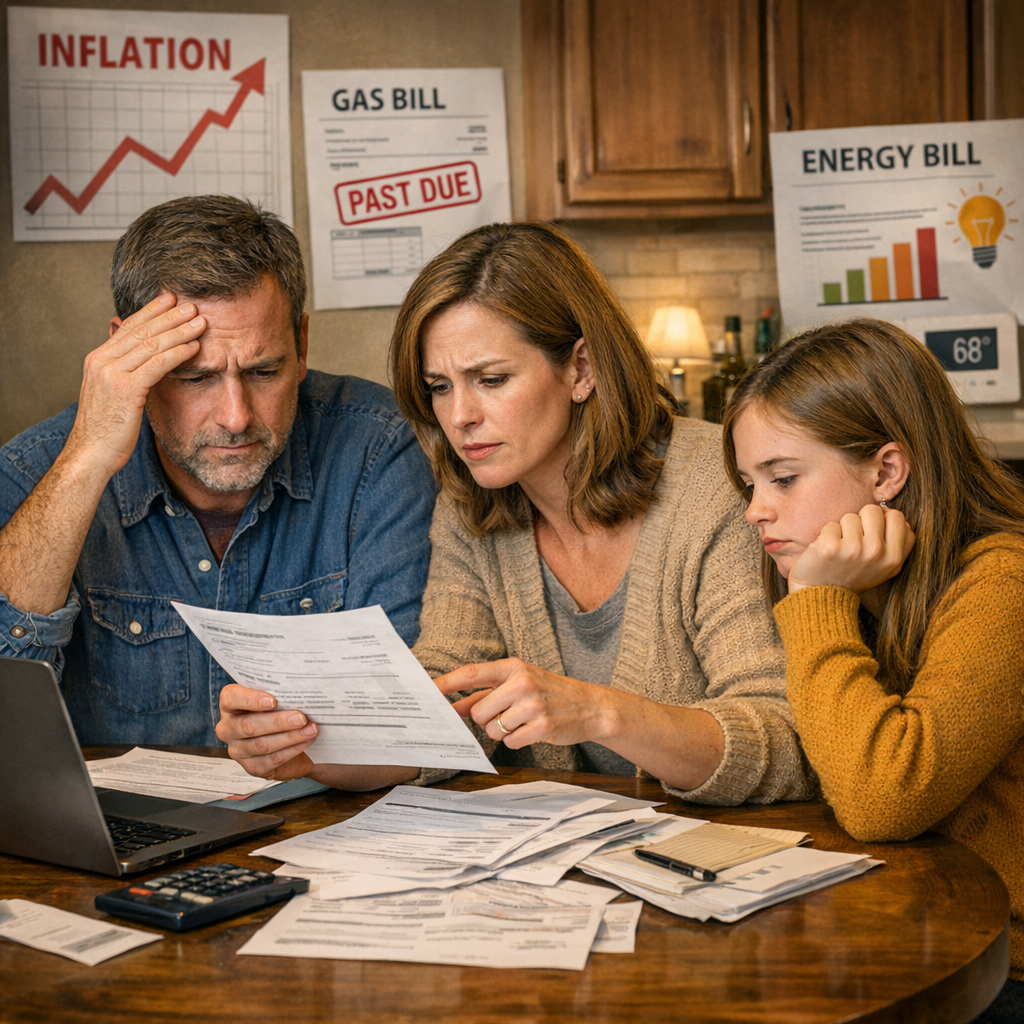
As the nation grapples with escalating inflation and surging energy prices, many Americans are expressing growing concern over their financial well-being. Recent developments have intensified these worries, highlighting the need for effective policy responses to stabilize the economy.
Inflation and Energy Prices on the Rise
Inflation has reached its highest level in nearly three years, with April’s rate climbing to 3.8%. This uptick is largely attributed to the ongoing military conflict with Iran, which began in February and led to the closure of the Strait of Hormuz—a critical passage for global oil shipments. Consequently, national average gas prices have soared above $4.50 per gallon, with some states experiencing prices exceeding $5.00 per gallon. These increases have placed a significant strain on household budgets, as wages struggle to keep pace with rising costs.
Public Sentiment Reflects Economic Anxiety
A recent CBS News/YouGov poll indicates that 70% of Americans feel “angry” or “frustrated” about the current economic situation. Only 11% expressed enthusiasm, while 19% reported satisfaction. This widespread dissatisfaction underscores the urgency for policymakers to address the economic challenges facing the nation.
Policy Responses and Future Outlook
In response to mounting economic pressures, the Federal Reserve has signaled potential interest rate adjustments to curb inflation. However, the effectiveness of such measures remains uncertain, especially given the complex interplay of global events and domestic policies. As the midterm elections approach, economic issues are likely to dominate political discourse, with voters seeking solutions to alleviate financial burdens.
For residents of Columbus, Ohio, and across the country, staying informed about these developments is crucial. Engaging with local representatives and participating in community discussions can help ensure that the voices of everyday Americans are heard in the policymaking process.