

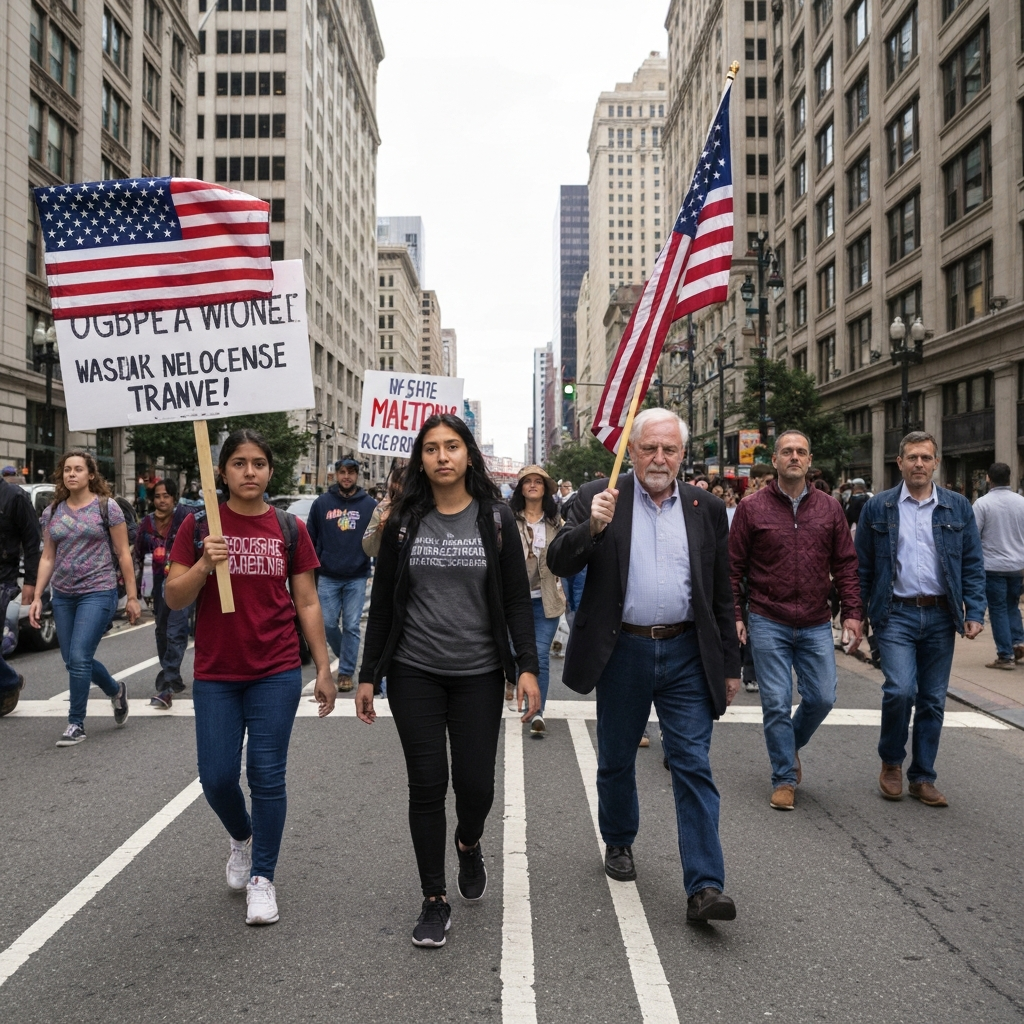
The United States has recently experienced notable developments in both its economic performance and political dynamics. Understanding these changes is essential for comprehending the nation’s current trajectory.
Economic Growth and Challenges
In the first quarter of 2026, the U.S. economy expanded at an annualized rate of 2%, marking a recovery from the previous quarter’s sluggish 0.5% growth. This rebound was largely driven by increased federal spending following a 43-day government shutdown and robust investments in artificial intelligence sectors. However, the conflict in Iran has introduced economic uncertainties, particularly due to disruptions in the Strait of Hormuz, leading to rising energy prices and inflation concerns. Consumer spending has also shown signs of slowing, reflecting financial pressures on middle and moderate-income households. Source
Income Disparities and the K-Shaped Recovery
The Federal Reserve Bank of New York has highlighted a K-shaped recovery in the U.S. economy, where financial gains are increasingly concentrated among higher-income households. Since January 2023, real retail spending growth has been uneven, with wealthier individuals driving much of the increase due to high returns on financial assets. In contrast, lower- and middle-income households have experienced slower spending growth, especially after the expiration of pandemic-era relief programs. This divergence underscores the economy’s vulnerability to shocks and raises concerns about long-term stability. Source
Political Polarization and Party Dynamics
The United States continues to grapple with significant political polarization. The two major national political parties, the Democratic Party and the Republican Party, have become increasingly ideologically distinct. This division is evident in various aspects of society, including religious affiliations and social media usage. For instance, evangelical Protestants and members of the Church of Jesus Christ of Latter-day Saints predominantly identify with or lean toward the Republican Party, while historically Black Protestant church members and Jewish Americans tend to align with the Democratic Party. Such alignments contribute to the deepening partisan divides observed in recent years. Source
In summary, the United States is navigating a complex landscape marked by economic recovery tempered by income disparities and geopolitical uncertainties, alongside a political environment characterized by deepening polarization. These factors collectively shape the nation’s current and future trajectory.